

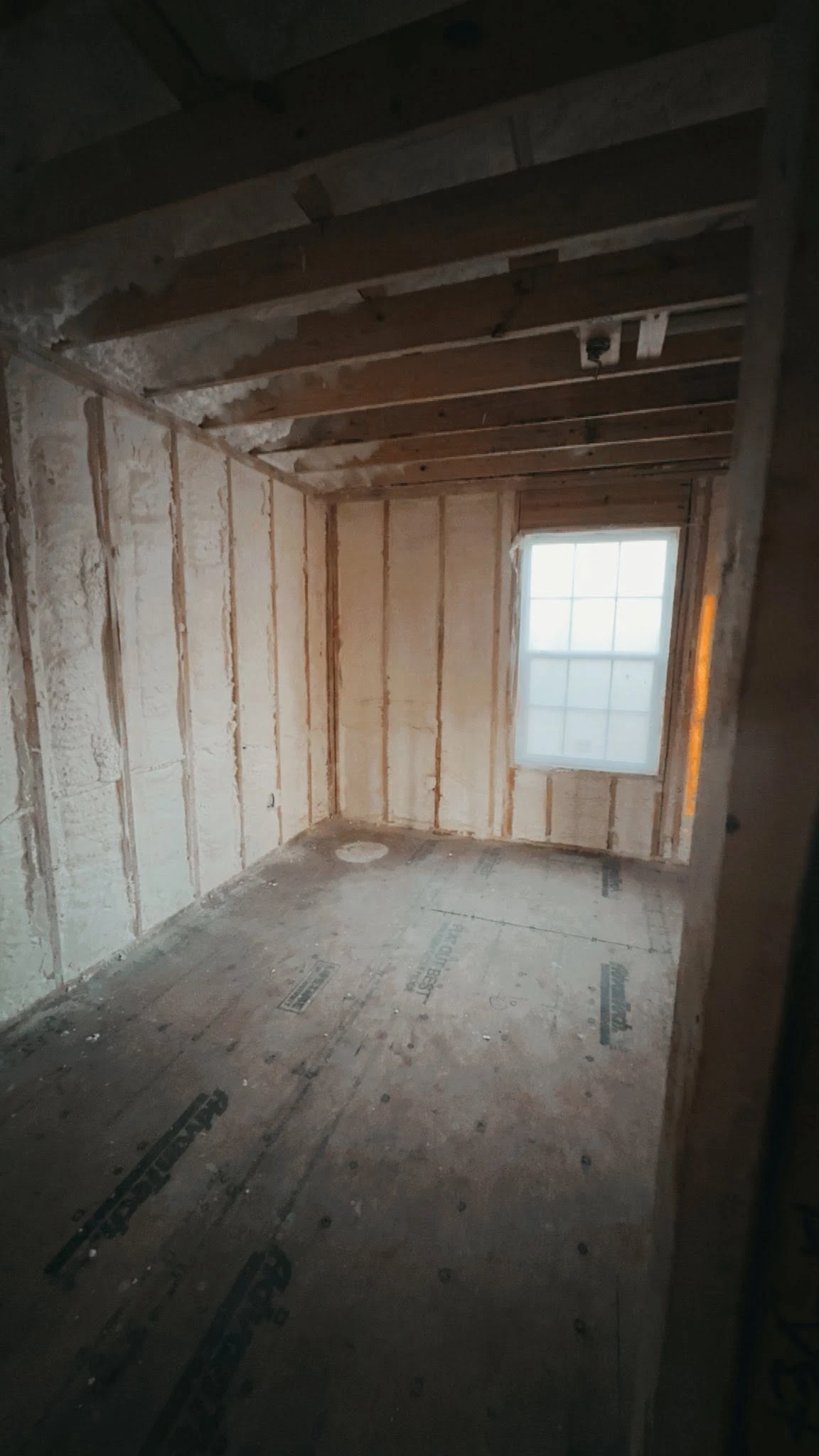
Spray polyurethane foam (SPF) insulation delivers some of the highest R-values and air-sealing performance available, but when installation goes wrong the results range from lingering chemical odors and foam shrinkage to moisture damage and structural issues. Most spray foam problems trace back to a handful of common causes: incorrect mixing ratios, poor substrate preparation, improper lift thickness, excessive moisture, and installation in temperatures or humidity levels outside manufacturer specifications. Identifying and correcting these issues early prevents long-term damage to the building envelope and protects the homeowner’s investment.
Before diagnosing problems, it helps to understand the two primary spray foam categories. According to Wikipedia, spray polyurethane foam insulation comes in two forms: light-density open-cell (half-pound) and medium-density closed-cell (two-pound). Each type has distinct physical properties, performance characteristics, and installation requirements.
| Property | Open-Cell SPF (0.5 lb) | Closed-Cell SPF (2 lb) |
|---|---|---|
| R-Value per Inch | R-3.5 to R-3.8 | R-5.8 to R-6.8 |
| Expansion Rate | 100x to 150x liquid volume | ~30x liquid volume |
| Density | 0.4 to 0.6 lb/cu ft | 1.5 to 2.0 lb/cu ft |
| Vapor Permeance (at typical thickness) | 6 to 10 perms (Class III retarder) | Less than 1 perm at 2 in (Class II retarder) |
| Air Barrier | Yes, at 5.5 inches or more | Yes, at minimum 50 mm thickness |
| Water Resistance | Absorbs liquid water | Water-resistant |
| Primary Blowing Agent | Water | HFC-245fa and water blends |
The differences between these two types directly influence which problems are more likely to occur and how we approach each repair.
Off-ratio foam occurs when the A-side (isocyanate) and B-side (polyol blend) chemicals are not delivered in the correct 1:1 ratio by volume. This is one of the most serious spray foam problems because it affects every physical property of the cured material.
A-side-rich foam (too much isocyanate) becomes hard, friable, and brittle. It cracks easily under stress and can darken or scorch from excessive exothermic reaction. B-side rich foam (too much polyol blend) stays soft and gummy, never reaching full structural integrity, and often produces strong, persistent chemical odors.
Mechanical removal is the only acceptable repair for off-ratio foam. We cut out all affected material back to solid, properly cured foam at a 45-degree angle, clean and reprime the substrate if needed, then respray with properly proportioned material. Our technicians verify mix ratio and equipment calibration before every job and take periodic quality-control samples during application to confirm density and cell structure.
Shrinkage and cracking in closed-cell foam almost always trace back to excessive exothermic heat. When the chemical reaction generates more heat than the foam can dissipate, the material scorches, cracks, and pulls away from framing and sheathing. According to Journal of Light Construction, closed-cell foam should always be installed in lifts no thicker than 1.5 inches, with 10 to 15 minutes between passes for heat dissipation.
We install closed-cell foam in multiple thin lifts, allowing exothermic heat to release between each pass. If we encounter existing shrinkage from a previous installation, we cut out the damaged areas (typically affecting 5 to 15 percent of the total application), verify adhesion at the repair boundaries, and respray using proper technique. Picture-framing stud bays and ceiling cavities before filling the center ensures uniform growth and prevents the trapped heat that causes shrinkage.
Moisture is the silent enemy of spray foam insulation. When substrate moisture content exceeds safe levels, water reacts with the A-side isocyanate as an unintended blowing agent, producing foam with poor cell structure, low density, and weak adhesion. As framing dries, the foam separates from the substrate, creating gaps that compromise air sealing and thermal performance.
Wood framing with moisture content above 19% is the most common culprit. Concrete presents additional challenges because it can appear dry on the surface while holding significant moisture below. The industry standard test for concrete involves taping an 18-inch square of clear plastic to the surface for 16 hours. If condensation forms or the concrete darkens, it is too wet for foam application.
Our technicians measure substrate moisture with calibrated moisture probes before every spray application. We check ambient temperature and humidity conditions throughout the day and will not spray when conditions fall outside manufacturer specifications. For existing installations with adhesion failure, we remove the poorly bonded foam, allow the substrate to dry completely, verify moisture levels, and respray under proper conditions.
Whether spray foam requires an additional vapor retarder depends on the foam type, installed thickness, climate zone, and interior humidity levels. Building Science Corporation research demonstrates that closed-cell foam applied at 2 inches or more controls vapor diffusion to safe levels in climates up to 10,000 heating degree days with interior relative humidity up to 50%. Open-cell foam, however, may require additional vapor control in colder climates.
Adding a vapor barrier where none is needed is wasteful and can trap moisture in the assembly. Skipping a vapor barrier where one is required can lead to condensation, mold growth, and wood rot. Getting this detail right depends on understanding the specific foam product, climate zone, and building assembly.
We evaluate each project based on its climate zone, assembly type, and interior conditions before recommending open-cell or closed-cell foam. In cold climates with high interior humidity, we typically specify closed-cell foam in sufficient thickness to serve as the vapor retarder without additional materials. When open-cell foam is the right choice, we determine whether supplemental vapor diffusion control is needed and specify it accordingly.
Spray foam emits volatile chemicals during and immediately after application. The U.S. Environmental Protection Agency notes that while spray foam is considered relatively inert once fully cured, the potential for off-gassing during curing is not fully understood and requires more research. Most manufacturers recommend 24 hours after application before re-occupancy, though curing times vary based on product formulation, temperature, humidity, foam thickness, and application technique.
Odors that persist beyond a week after installation often indicate off-ratio foam or incomplete curing caused by installation in cold or high-humidity conditions. These situations require professional investigation and may involve air quality testing by a certified indoor air quality consultant.
We follow strict ventilation protocols during and after every spray application. Our team installs spray foam only within manufacturer-recommended temperature ranges, uses calibrated equipment to ensure proper chemical ratios, and confirms adequate curing time before allowing re-occupancy. We provide clear guidance to homeowners on expected curing timelines and ventilation requirements.
The Spray Polyurethane Foam Alliance (SPFA) states that building and fire codes require SPF to be separated from occupied interior spaces by a 15-minute thermal barrier, typically half-inch gypsum wallboard or plywood. In attics and crawlspaces not regularly accessed, SPF must instead be covered with an ignition barrier or must pass specific burn tests. These requirements exist because SPF is a combustible material that must meet the same fire performance standards as other building materials.
We verify thermal and ignition barrier requirements for every project before, during, and after installation. Our team ensures all applicable fire protective coverings are in place and documented. For exposed SPF applications, we confirm that products carry valid ICC-ES evaluation reports and meet local building code fire safety standards.
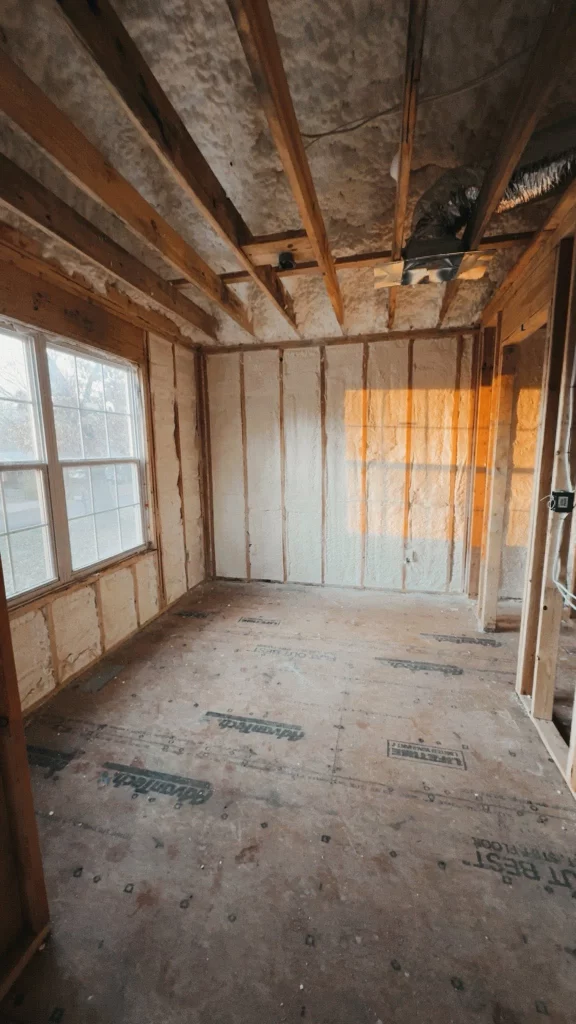
Several variables influence whether a spray foam installation performs as designed or develops problems over time:
| Scenario | Home Type | Problem | Solution | Outcome |
|---|---|---|---|---|
| Crawlspace retrofit | 1970s ranch home | Closed-cell foam shrinking away from rim joist due to 3-inch single pass | Removed failed foam, resprayed in three 1-inch lifts with cooling intervals between passes | Full adhesion restored, R-19 rim joist assembly achieved |
| Attic insulation | New construction 2,400 sq ft home | Open-cell foam installed in Climate Zone 5 with no additional vapor control | Evaluated using WUFI modeling, added smart vapor retarder on warm side | Assembly meets IRC requirements, no condensation risk |
| Wall cavity fill | Retrofit 1950s two-story | B-side rich foam producing soft, odorous material in second-floor walls | Mechanically removed affected bays (12% of total), verified substrate, resprayed | Density tests passed, odors eliminated within 48 hours |
| Pole barn insulation | Metal building, uninsulated | Closed-cell foam delaminating from cold steel panels sprayed during winter | Removed foam, waited for spring temperatures, resprayed with primer on steel | Complete adhesion, no seasonal recurrence |
| Basement walls | Finished basement with moisture issues | Open-cell foam absorbing ground moisture through concrete block walls | Removed open-cell foam, replaced with closed-cell foam and interior drainage system | Moisture intrusion stopped, basement humidity stabilized |
Whether you are dealing with a failed spray foam insulation installation that needs repair or planning a new insulation project from scratch, Summit Thermal Solutions has the experience and equipment to get it right. Our team evaluates every substrate, monitors conditions throughout the application, and follows industry best practices to prevent the problems that compromise comfort, energy efficiency, and indoor air quality. We work on homes ranging from 1,500 to 2,500 square feet throughout our service area, handling everything from attics and crawlspaces to pole barns and commercial buildings.
Request a Free Quote | Schedule an Inspection
Contact us at (573) 889-3512 or [email protected] to discuss your project. Summit Thermal Solutions is here to make sure your insulation performs the way it was designed to, for the life of your building.
In most cases, yes. Off-spec foam usually affects only 5 to 15 percent of the total application. We cut out the defective areas, verify substrate conditions, and respray the affected sections without disturbing the sound foam surrounding them.
Most manufacturers recommend 24 hours before re-occupancy. Fumes and mist from the application typically dissipate within a few hours to a few days depending on ventilation, but odors lasting beyond one week may indicate off-ratio foam or a curing problem that needs investigation.
In most applications, no. Closed-cell foam applied at 2 inches or more achieves a permeance below 1 perm, qualifying as a Class II vapor retarder that controls diffusion condensation without additional materials in most climate zones.
This is most commonly caused by excessive exothermic heat from closed-cell foam installed in lifts thicker than 1.5 inches. The heat buildup causes the foam to shrink and delaminate. Cold substrate temperatures during application can also cause the foam to separate from the surface.
Persistent odors beyond a week often signal off-ratio foam or incomplete curing. Contact the installer first to review installation conditions and product data. If the issue is not resolved, hire an independent indoor air quality consultant to diagnose the source and determine whether removal or remediation is needed.