

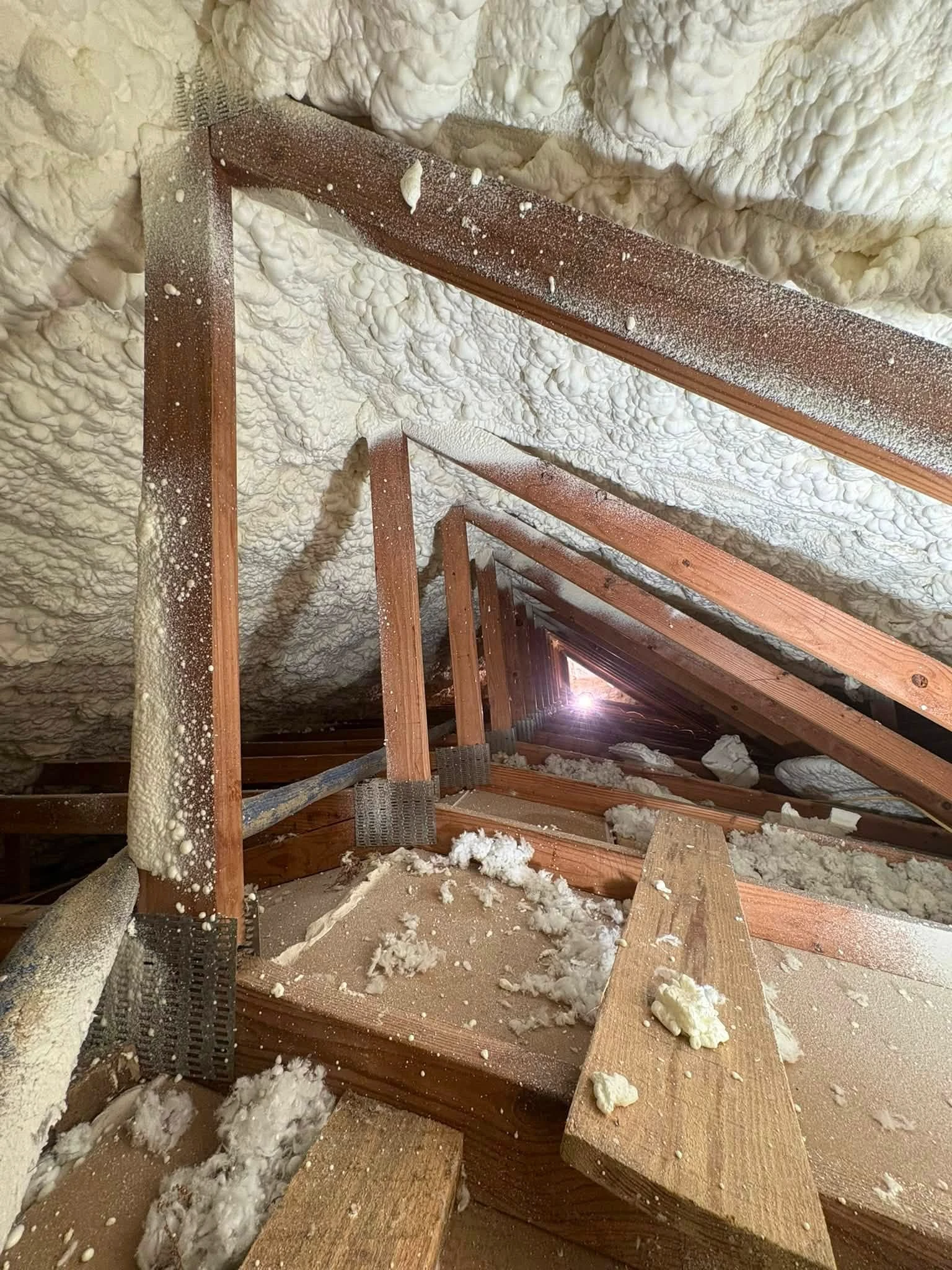
Builders in Licking, Missouri, are increasingly choosing spray foam insulation for new construction projects because it delivers a combination of air sealing, thermal resistance, moisture control, and structural support that traditional insulation materials like fiberglass batts simply cannot match. In a region where hot summers and cold winters demand reliable building envelopes, spray foam insulation application addresses the specific performance needs of homes built in Missouri’s mixed-humid climate zone. The right insulation choice depends on several factors, including the project type (custom home, spec build, or commercial structure), the target application area (walls, attic, crawlspace), budget considerations, and long-term energy performance goals.
Fiberglass batts and blown cellulose have been standard materials in residential construction for decades, but they have well-documented limitations. Neither material creates an effective air seal on its own, meaning air can still pass through gaps around the insulation, framing, and penetrations. Spray foam insulation is fundamentally different because it expands upon application, filling every cavity, crack, and irregular void in the building envelope.
According to the U.S. Department of Energy’s Office of Energy Efficiency and Renewable Energy, spray foam insulation “can fill even the smallest cavities, creating an effective air barrier” that traditional materials cannot achieve without additional sealants, tapes, and house wrap U.S. Department of Energy – Types of Insulation. This dual function of insulating and air sealing in one step is a primary reason builders in Licking are shifting toward spray foam for their new construction projects.
Beyond air sealing, spray foam blocks all three forms of heat transfer: conductive, radiant, and convective. Wikipedia notes that “foam insulation blocks all three forms of heat transfer” and that spray polyurethane foam typically achieves an R-value of R-3.4 to R-6.7 per inch, compared to glass wool’s R-3 to R-4 per inch Wikipedia – Spray Foam. For builders working in Missouri where both heating and cooling demands are significant, this higher thermal resistance per inch of thickness translates directly to better-performing homes.
One of the first decisions builders face is choosing between open-cell and closed-cell spray foam. Each type has distinct properties that make it better suited for specific applications within a new build. The table below compares the two options side by side.
| Property | Open-Cell Spray Foam | Closed-Cell Spray Foam |
|---|---|---|
| Density | Low density (half-pound foam) | Medium density (two-pound foam) |
| R-Value Per Inch | Starting at R-3.6 | Starting at R-5.7 |
| 2×4 Wall Cavity Fill | R-13 | R-20 |
| Air Barrier | Yes | Yes |
| Vapor Retarder (Class II) | Yes | Yes |
| Moisture Resistance | Absorbs water, not for below grade | Resists water, suitable for crawlspaces |
| Structural Strength | Minimal | Increases wall racking strength |
| Sound Dampening | Superior sound absorption | Moderate sound reduction |
| Best Applications | Interior walls, attics, ceilings | Exterior walls, crawlspaces, basements |
According to the Spray Polyurethane Foam Alliance, open-cell foam expands significantly during application, filling cracks and crevices while providing sound reduction by blocking air leakage. Closed-cell foam, by contrast, is rigid and adds measurable structural support to wall assemblies Why Spray Foam – R-Values and Performance.
For Licking builders, the practical approach often involves using both types strategically throughout the same project. Open-cell spray foam works well in interior wall cavities and attic spaces where sound dampening and cost efficiency are priorities. Closed-cell foam is the better choice for crawlspaces, basement rim joists, and exterior-facing walls where moisture resistance and structural reinforcement are needed.
Air leakage is one of the largest sources of energy waste in residential buildings. The DOE reports that air leakage “can account for 30% or more of a home’s heating and cooling costs” U.S. Department of Energy – Air Sealing for New Home Construction. In Missouri’s climate, where temperatures swing from freezing in winter to the 90s in summer, even small air leaks compound into significant energy losses season after season.
Spray foam insulation addresses this by creating a continuous air barrier that eliminates random air movement through building cavities. The American Chemistry Council’s Center for the Polyurethanes Industry notes that “as much as 40% of a building’s energy is lost due to air infiltration” through gaps, holes, and air leaks that spray foam can prevent Why Spray Foam – Energy Efficiency. For new construction, this means HVAC systems do not have to work as hard to maintain consistent indoor temperatures, and builders can often specify smaller, less expensive equipment. The industry estimates that HVAC sizing can be reduced by up to 35% when spray foam insulation is properly installed throughout the building envelope.
This efficiency gain matters for both the builder and the eventual homeowner. Lower heating and cooling costs are a selling point, and the reduced equipment load can offset some of the insulation investment during the construction phase.
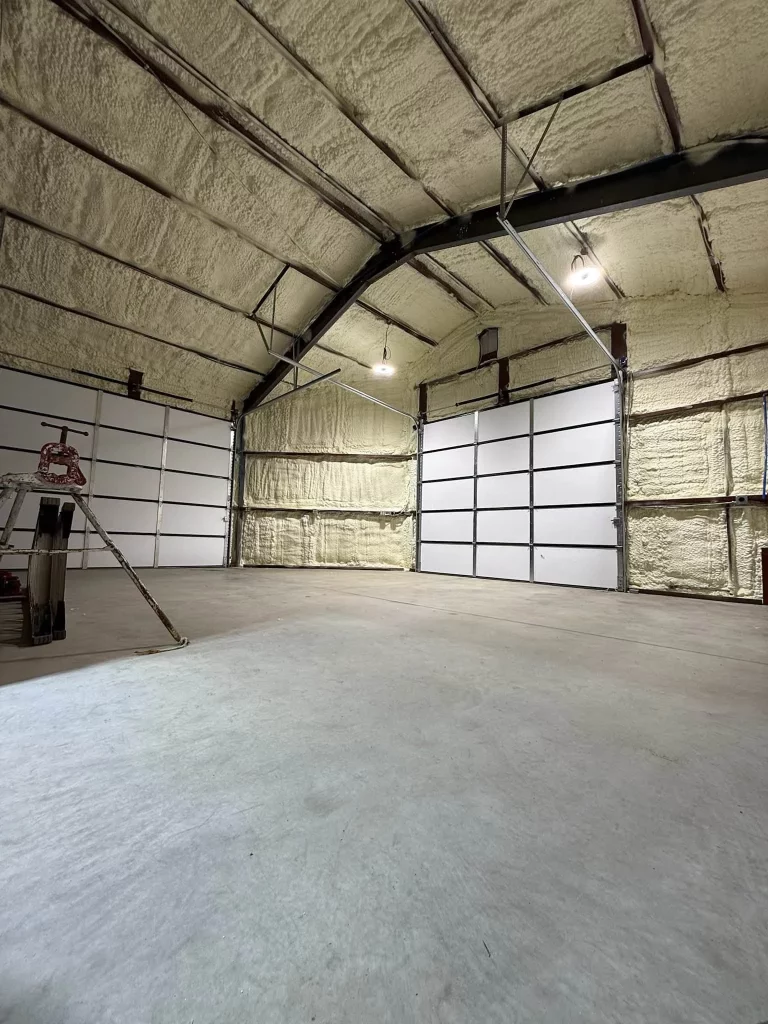
Missouri’s humidity levels create real challenges for building durability. Moisture that enters wall cavities through air leaks can condense on cooler surfaces, leading to mold growth, wood rot, and degraded insulation performance. Spray foam helps control moisture in two ways: by sealing the air leaks that let humid air into the building envelope, and by acting as a vapor retarder that slows moisture vapor transmission through the assembly.
The Spray Polyurethane Foam Alliance explains that “spray foam helps control moisture” because both open-cell and closed-cell formulations can function as moisture vapor barriers, and sealing gaps prevents humidity and condensation within the structure. For crawlspaces and basements, which are particularly common in Licking-area construction, closed-cell spray foam provides the added benefit of resisting direct water exposure while insulating the rim joist and foundation walls.
Builders who prioritize durability understand that moisture management is not optional. Spray foam reduces the conditions that allow mold and mildew to develop, contributing to a healthier indoor environment and reducing callback risk on new construction projects.
The ideal spray foam strategy depends on the type of new construction project. Here is how builders in the Licking area typically approach insulation planning based on project scope.
| Project Type | Recommended Foam Strategy | Key Notes |
|---|---|---|
| Custom Home (1,500-2,500 sq ft) | Closed-cell on crawlspaces and exterior walls, open-cell in attics and interior walls | Balances moisture protection with sound control and budget |
| Spec Build | Open-cell throughout wall cavities and attic, closed-cell on crawlspace only | Prioritizes cost efficiency while meeting code requirements |
| Pole Barn / Post-Frame | Closed-cell on walls and roof deck | Maximum R-value in limited cavity depth, structural reinforcement |
| Commercial Building | Closed-cell on exterior envelope, open-cell on interior partitions | Meets stricter commercial energy codes and sound isolation needs |
For custom homes where long-term performance is a top priority, the combination of both foam types provides the most complete building envelope. Spec builders working on tighter margins often lean toward open-cell applications where possible, reserving closed-cell for moisture-critical areas like crawlspaces.
Finding a qualified spray foam installer matters as much as choosing the right product. The DOE explicitly states that “liquid foam insulation requires special equipment and certification and should only be done by experienced installers”. Here are indicators that your insulation contractor is the right fit for your new construction project.
Planning a new build in or around Licking, Missouri? Summit Thermal Solutions provides professional spray foam insulation services for new construction projects throughout the area. Our team works directly with builders and homeowners to determine the right foam type and application strategy for every project, from custom homes to pole barns and commercial buildings. Call us at (573) 889-3512 or email [email protected] to discuss your build.
Request a Free Quote | Schedule a New Build Consultation
Yes. The combination of air sealing, higher R-values, moisture control, and potential HVAC downsizing makes spray foam a sound long-term investment, especially in Missouri’s climate with both heating and cooling demands.
Spray foam can achieve R-values that satisfy code requirements for walls, floors, ceilings, and roofs in every climate zone, and it often exceeds minimums when applied at standard thicknesses.
Yes. Because spray foam creates a tight building envelope, controlled fresh-air ventilation is recommended for safety, health, and performance, and to meet building codes.
Properly installed spray foam insulation can last the lifetime of the building without settling, degrading, or losing its air-sealing properties.
Builders commonly use both types. Open-cell is typically applied in interior walls and attics for sound control and cost efficiency, while closed-cell is used in crawlspaces, basements, and exterior walls for moisture resistance and structural strength.