
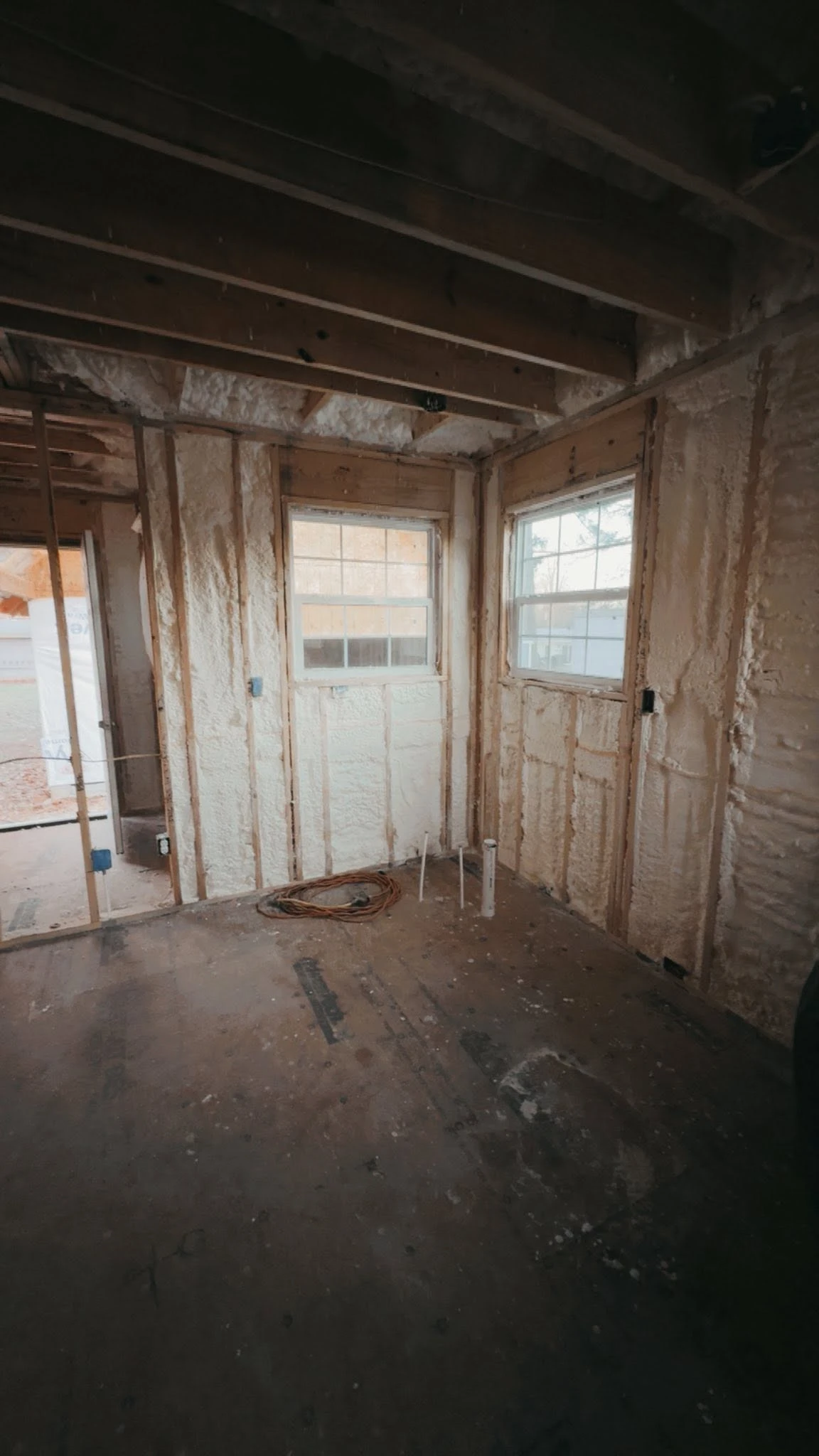
Pole barn insulation in Licking, MO typically ranges from $5,000 to $30,000 depending on the size of your building, the type of insulation material, and the complexity of the installation. The average project typically ranges around $8,000, with most homeowners falling between that midpoint and the higher end when they choose spray foam for full thermal protection. Licking sits in Missouri’s IECC Climate Zone 4A, which means your building needs meaningful R-value performance to handle the hot, humid summers and cold winters that define this humid continental region according to the International Energy Conservation Code enforced in Missouri.
The following table breaks down what you can expect based on your building’s needs. These figures reflect our actual project data from the Licking area and surrounding Texas County.
| Insulation Level | Typical Project Range | Best For | Coverage Scope |
|---|---|---|---|
| Basic / Partial | $5,000 | Small barns, workshops, storage buildings | Single-layer walls or ceiling only |
| Standard / Average | $8,000 | Mid-size barns, garages, hobby spaces | Full walls and ceiling with moderate R-value |
| Premium / Full Build | $30,000 | Large commercial barns, conditioned living spaces | Full envelope spray foam, high R-value, complex layouts |
Several variables push a project from the basic tier into the premium range. Square footage is the most obvious driver, but other factors carry significant weight, including roof pitch, building accessibility, the need to remove old insulation, and moisture or mold remediation before new insulation can be installed.
Licking, Missouri falls within IECC Climate Zone 4A, a humid continental classification with cold winters and hot, humid summers. The building code in this zone sets specific minimum R-values that your insulation must meet. Under the 2018 IECC, ceiling insulation must achieve at least R-49, wood frame walls require R-20 or R-13 with R-5 continuous insulation, and floors over unconditioned spaces need R-19.
For pole barns specifically, these targets matter because post-frame construction has different thermal characteristics than standard stick-built homes. The wide spacing of posts, metal roofing, and open wall cavities create more opportunities for air infiltration. Spray foam addresses these issues directly by expanding to fill gaps and creating an airtight seal that traditional batt insulation simply cannot match.
You can learn more about how this system works in our detailed spray foam insulation guide, which explains applications, benefits, and performance differences in depth.
The Department of Energy recommends even higher R-values for homeowners looking to maximize energy efficiency: R-60 for uninsulated attics and R-20 with continuous insulation for wood frame walls in Climate Zone 4.
Here are representative scenarios based on projects we have completed in the Licking, MO area and surrounding communities.
| Building Type | Location | Project Size | Typical Investment |
|---|---|---|---|
| 30×40 Equipment Storage Barn | Licking, MO 65542 | 1,200 sq ft, walls only | $5,000 |
| 40×60 Workshop with Conditioned Area | Licking, MO 65542 | 2,400 sq ft, full envelope | $8,000 |
| 60×80 Commercial Ag Building | Texas County, MO | 4,800 sq ft, walls and ceiling, spray foam | $15,000 |
| 50×100 Warehouse with Office Space | Near Licking, MO | 5,000 sq ft, full spray foam envelope | $30,000 |
These figures show how building size, usage type, and insulation scope work together to determine the final number. A simple storage barn that only needs wall insulation will always cost less than a fully conditioned commercial space requiring high R-value spray foam throughout the entire envelope.
Understanding what drives pricing helps you plan your budget and make smart decisions about where to invest. These are the primary cost factors we evaluate on every pole barn project in Licking.
Building Factors:
Site and Access Factors:
Material and Performance Factors:
| Material Type | R-Value Per Inch | Air Sealing | Best Application | Relative Investment |
|---|---|---|---|---|
| Open Cell Spray Foam | ~3.5 | Excellent | Walls, ceilings, irregular cavities | Lower than closed cell |
| Closed Cell Spray Foam | ~6.5 | Excellent | Walls, ceilings, moisture-prone areas | Higher than open cell |
| Fiberglass Batts | ~3.1 | Poor | Simple stud cavities, budget builds | Lowest |
| Rigid Foam Board | ~3.8 – 6.5 | Moderate | Continuous exterior insulation | Moderate |
Spray foam insulation delivers two advantages that are especially valuable in pole barn construction: superior air sealing and moisture control. The EPA estimates that homeowners save an average of 15% on heating and cooling costs by air sealing their homes and adding insulation. While that statistic applies to residential buildings, the principle holds even more strongly for pole barns, which typically start with far more air leakage than conventional construction.
Pole barn insulation makes sense for property owners in specific situations. Here is a quick guide to help you decide whether this investment fits your needs.
Ideal candidates for pole barn insulation:
Situations where pole barn insulation may not be the right fit:
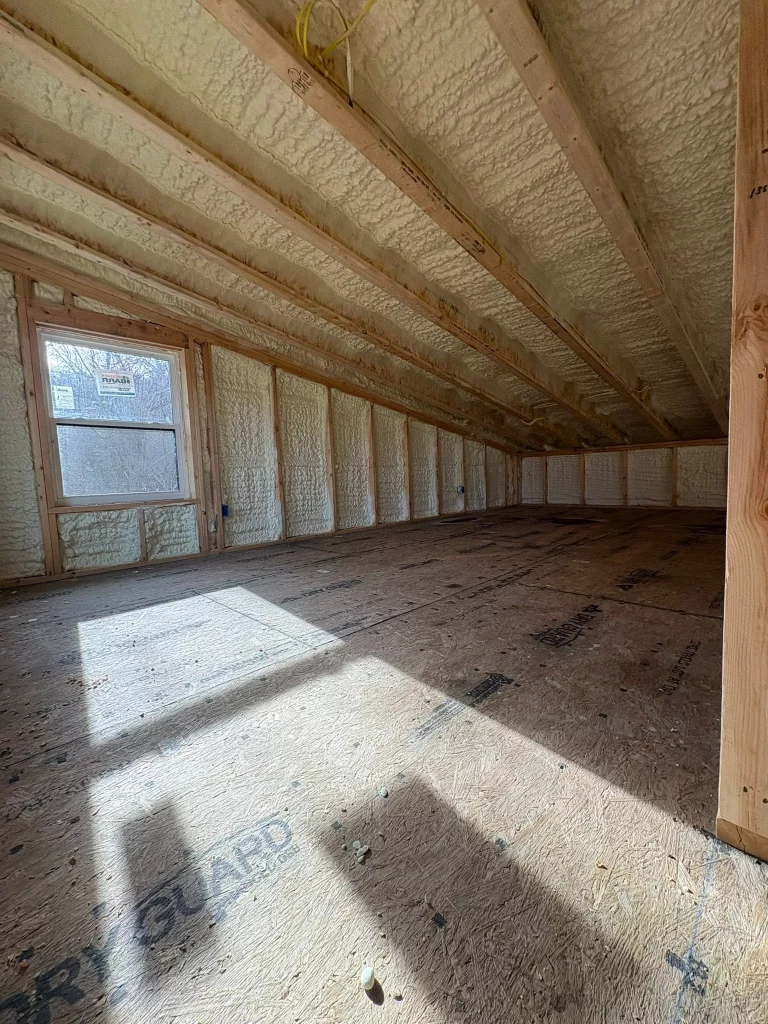
The cost of inaction on pole barn insulation is not always obvious upfront, but it compounds over time. An uninsulated or poorly insulated metal building in Missouri’s Climate Zone 4A creates a cycle of energy waste. During winter, heat escapes rapidly through the metal roof and walls. In summer, radiant heat from the metal roofing turns the building interior into an oven, forcing your cooling system to run continuously.
Beyond energy waste, moisture condensation is a serious and often overlooked problem. Warm indoor air meeting cold metal surfaces creates condensation that drips onto stored items, promotes rust on equipment, and can lead to mold growth. Proper insulation with an effective vapor barrier eliminates this issue entirely.
Summit Thermal Solutions provides professional pole barn insulation services throughout Licking, MO, and the surrounding areas. Our team evaluates every building individually, accounting for your usage needs, climate zone requirements, and budget to recommend the right insulation solution. We handle everything from basic wall insulation on small barns to complete spray foam envelopes on large commercial buildings.
Call us at (573) 889-3512 or email [email protected] to discuss your project. We provide detailed, honest assessments with no pressure and no hidden costs.
Request a Free Quote | Schedule an Assessment
Spray foam insulation is generally the best choice for Missouri pole barns because it expands to fill gaps, creates an airtight seal, and provides built-in moisture control, all of which are critical in our humid continental climate.
Most standard pole barn insulation projects in the Licking area take between one and three days depending on the building size, insulation type selected, and whether any prep work like old insulation removal is needed.
While fiberglass batts can be a DIY option, spray foam requires professional equipment and training. Improper installation can lead to moisture problems, air leaks, and wasted material that ends up costing more in the long run.
Converting an uninsulated pole barn into a conditioned, usable space by adding proper insulation significantly increases its functional value and market appeal, especially for workshops, office spaces, or agricultural buildings.
Spray foam acts as both insulation and a vapor barrier when applied at sufficient thickness. For other insulation types like fiberglass, a separate vapor barrier is required to prevent moisture problems, which is especially important in Missouri’s humid climate.