

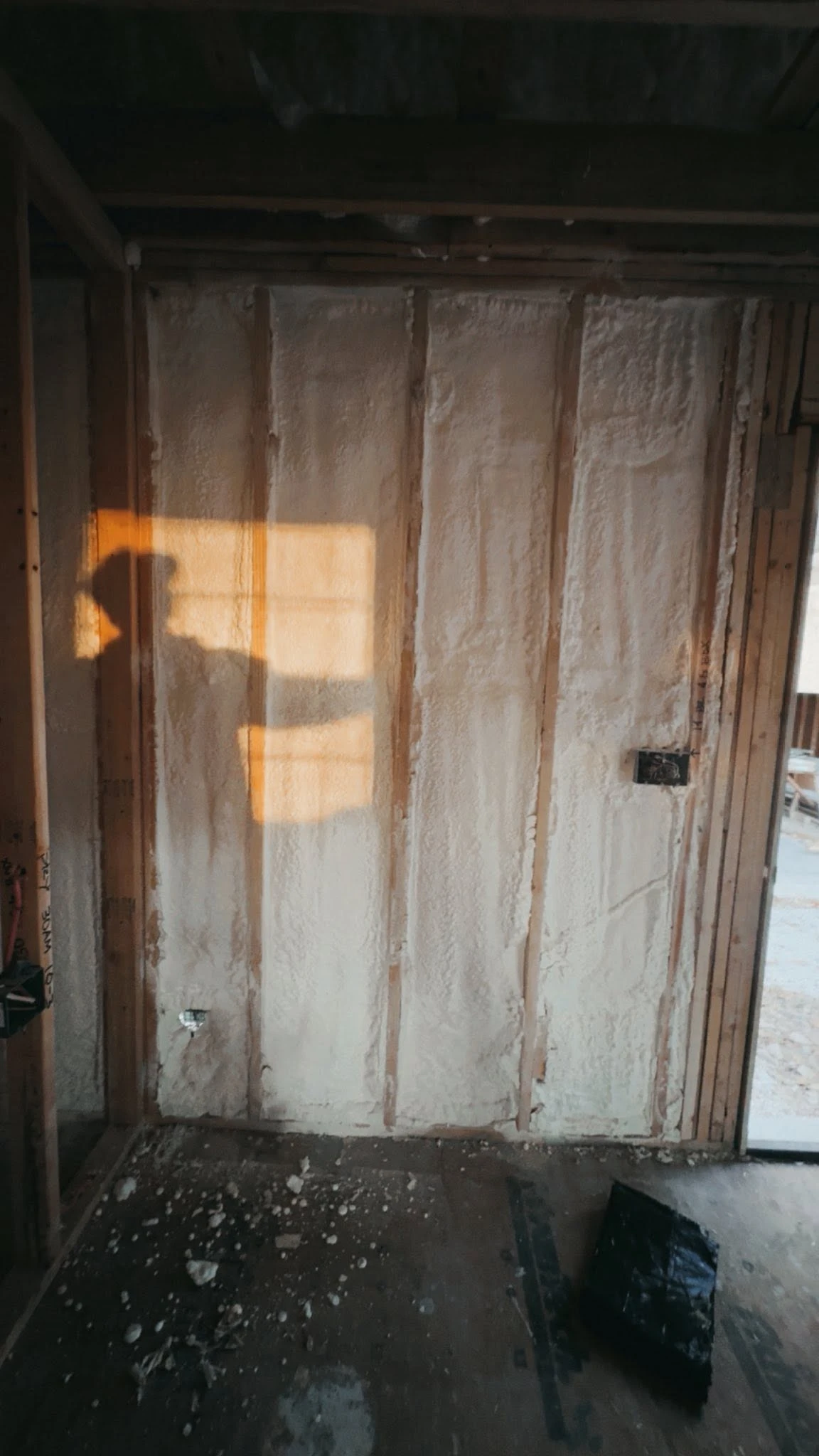
Spray foam insulation is one of the few building materials that simultaneously blocks air infiltration, resists moisture, and prevents the conditions mold needs to grow. For homeowners and builders in Licking, MO, where seasonal humidity swings, heavy spring precipitation, and warm Gulf air masses create constant pressure on the building envelope, spray foam offers a defense that traditional insulation like fiberglass simply cannot match. The two main types, closed-cell and open-cell spray foam, each serve different needs but share the same fundamental mechanism: they expand on contact to fill every crack, gap, and void in your walls, attic, crawlspace, or pole barn, creating a continuous sealed barrier that stops air and water vapor from passing through.
Missouri sits at a geographic crossroads where cold arctic air from the north meets warm, moist air from the Gulf of Mexico. According to NOAA’s State Climate Summaries, summer nighttime low temperatures have been at record highs since 2010, and summer humidity has trended upward since the mid-20th century. Southern Missouri, where Licking is located, receives significant annual precipitation as part of a band stretching across the southeastern portion of the state.
This climate profile means Licking homes experience:
When humid air enters wall cavities or attic spaces through unsealed gaps, it condenses on cooler surfaces. That condensation creates the exact environment mold needs to establish itself.
The EPA states clearly that the key to mold control is moisture control A Brief Guide to Mold, Moisture and Your Home. Mold spores are present virtually everywhere, indoors and outdoors. They only become a problem when they land on surfaces with sufficient moisture. If you eliminate the moisture, mold cannot grow.
Spray foam insulation addresses this at the building envelope level:
Closed-cell spray foam is a medium-density, rigid material that expands to fill cavities and hardens into a solid mass. According to Wikipedia’s technical overview, closed-cell foam has a Long Term Thermal Resistance R-value of 5.1 to 6.5 per inch. When installed at a minimum thickness of approximately 2 inches, it functions as a vapor barrier, meaning water vapor cannot pass through it. This prevents humid outdoor air from infiltrating wall cavities during summer and stops warm indoor air from carrying moisture into exterior walls during winter.
Open-cell spray foam is a lighter, semi-rigid material with a sponge-like structure. It has an R-value of roughly 3.5 to 3.8 per inch. While it is more vapor permeable than closed-cell foam, it still provides effective air sealing, which is the primary pathway through which most moisture enters building cavities. At 5.5 inches or more, open-cell foam also acts as a full air barrier.
The EPA’s guidance on moisture control in building envelopes notes that “assuring the integrity of exterior walls is the first line of defense for preventing moisture problems in all climates.” Spray foam delivers that integrity by creating a monolithic seal that eliminates the cracks, gaps, and joints where air and water vapor typically pass through.
| Property | Closed-Cell Spray Foam | Open-Cell Spray Foam |
|---|---|---|
| Density | Medium (2 lb) | Light (0.5 lb) |
| R-value per inch | 5.1 to 6.5 | 3.5 to 3.8 |
| Vapor barrier | Yes, at minimum thickness | No (vapor permeable) |
| Air barrier | Yes | Yes, at 5.5+ inches |
| Best application | Crawlspaces, basements, exterior walls, metal buildings | Interior walls, attics, sound control |
| Rigid structural support | Adds wall strength | No structural benefit |
Air leakage is a major source of energy waste and moisture problems. The Department of Energy’s Air Sealing Your Home guide explains that air leakage occurs when outside air enters and conditioned air leaves uncontrollably through cracks and openings. It specifically warns that “air leakage also can contribute to moisture problems that affect occupants’ health and the structure’s durability.”
Traditional insulation like fiberglass batts or blown cellulose sit in wall cavities but do not seal those cavities. Air can still pass through, around, and between the insulation. Studies referenced by the Wikipedia spray foam article indicate that 40% of a home’s energy is lost through air infiltration, and buildings treated with spray foam can insulate up to 50% better than those using traditional products.
Spray foam insulation solutions solve this by expanding into and sealing:
When these pathways are eliminated, humid air cannot enter the building envelope, condensation cannot form in wall cavities, and mold loses the moisture source it needs to survive.
Every building is different, but certain areas consistently benefit most from spray foam insulation in the Licking area.
Crawlspaces and basements are the highest-priority targets. Ground moisture constantly evaporates upward into crawlspace air, and that humid air is easily drawn into the living space above through floor penetrations and framing gaps. Closed-cell spray foam applied to crawlspace walls and rim joists seals out that moisture and creates a conditioned space below the home.
Attics are another critical zone. In Missouri’s mixed climate, attic insulation must handle both hot summers and cold winters. Spray foam applied to the roof deck (rather than the attic floor) creates a conditioned attic, which protects ductwork and HVAC equipment from temperature extremes while eliminating the air leaks that drive ice dams in winter and heat gain in summer.
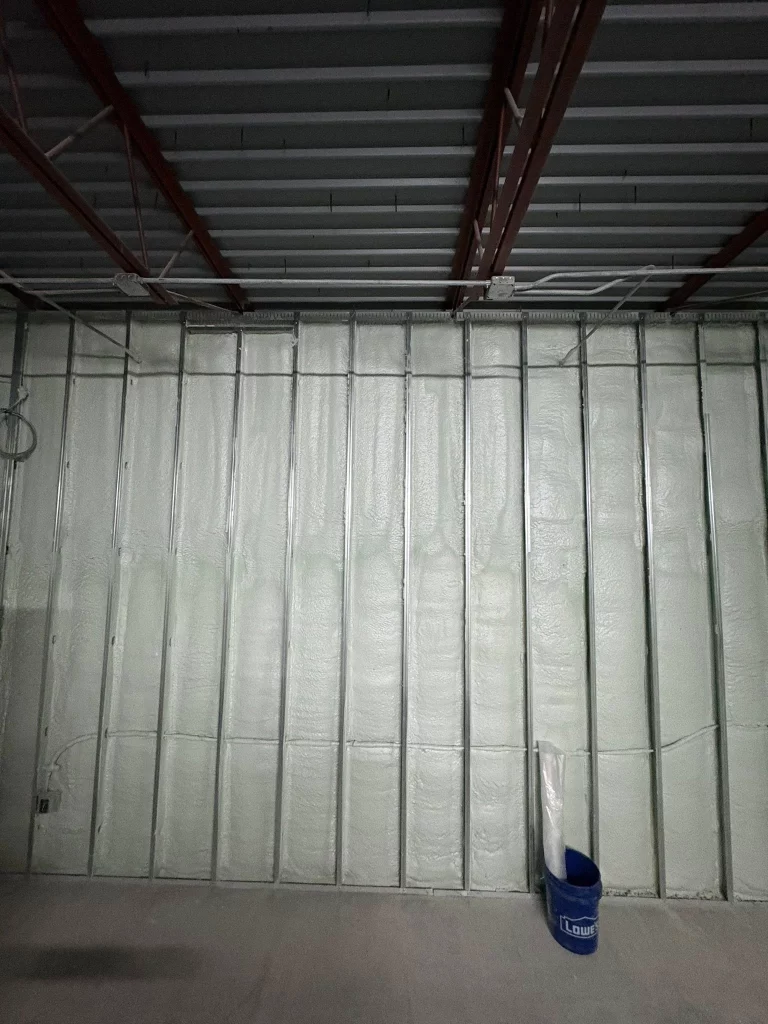
Pole barns and metal buildings present unique challenges because metal conducts heat rapidly, leading to severe condensation during temperature changes. Spray foam applied to the interior of metal roofing and walls prevents condensation from forming and dripping onto equipment, feed, or stored goods.
Exterior walls in both new construction and retrofit projects benefit from the combined air sealing and insulating properties of spray foam. Even in existing homes where wall cavities are already closed, smaller gaps around windows, doors, and penetrations can be sealed with low-expansion foam to reduce air and moisture movement.
| Project Type | Recommended Foam Type | Why It Works |
|---|---|---|
| Crawlspace encapsulation | Closed-cell | Vapor barrier prevents ground moisture from entering the living space |
| Attic insulation (roof deck) | Closed-cell or open-cell | Seals all penetrations and eliminates air leaks at the top of the building |
| Metal building or pole barn | Closed-cell | Prevents condensation on metal surfaces year-round |
| Interior wall retrofit | Open-cell | Provides air sealing and sound dampening at lower installed cost |
| New construction walls | Closed-cell | Maximizes R-value per inch and adds structural rigidity |
Choosing the right installer matters as much as choosing the right material. Poor installation can leave gaps that defeat the entire purpose of spray foam. Look for these indicators:
Summit Thermal Solutions provides spray foam insulation services for homes, pole barns, crawlspaces, and commercial buildings throughout the Licking, MO area. Our team evaluates each building individually to recommend the right foam type, thickness, and application method for your specific moisture and energy concerns. Whether you are building new, retrofitting an older home, or addressing condensation in a metal building, we can help you seal the envelope and protect your investment for the long term.
Request a Free Quote | Schedule an Assessment
Call us at (573) 889-3512 or email [email protected] to discuss your project.
Properly installed spray foam insulation is a permanent building material. It does not settle, sag, or degrade over time, and it maintains its air sealing and insulating properties for the life of the structure.
Closed-cell spray foam is the better choice for Missouri crawlspaces because it acts as both an air barrier and a vapor barrier, blocking ground moisture from entering the building envelope.
In most cases, old insulation should be removed before spray foam application to ensure proper adhesion and to address any hidden moisture or mold issues that may exist beneath the existing material.
ENERGY STAR estimates that air sealing combined with adding insulation can save homeowners an average of 15% on heating and cooling costs by reducing the uncontrolled air leaks that drive energy waste.
The Consumer Product Safety Commission recommends that building occupants, including pets, vacate the premises for at least 24 hours after spray foam application to allow the material to fully cure and off-gas.